The release of the CERT-In Blueprint for Reducing Exposure and Defending against AI-Assisted Vulnerabilities Exploitation in Digital Infrastructure represents a watershed moment for corporate cybersecurity in India. In the modern threat landscape, security is no longer a static battle of human intellect against human intellect. It has transitioned into a highly compressed, automated environment where defensive algorithms must withstand autonomous, agentic offensive systems.
For years, enterprises operated under the assumption that they had time. A new vulnerability would be disclosed (a CVE), and IT security teams would have a predictable window of several days—often weeks—to test, schedule, and deploy patches across their cloud and on-premise infrastructure. This window was known as the "remediation buffer."
The integration of generative AI, large language models (LLMs), and autonomous agentic workflows has completely shattered this buffer. Offensive threat actors are no longer manually scanning ports or hand-crafting exploit payloads. Instead, they deploy highly specialized AI scanners that perform rapid reconnaissance, aggregate OSINT data, map APIs, and chain exploits together in seconds.
Under the CERT-In 2026 cybersecurity guidelines, organizations can no longer rely on periodic audits or reactive incident response. To survive this shift, enterprises must understand the mechanics of the new offensive paradigm and transition toward active, continuous cyber exposure management.
The Compression of the Breach Timeline
To understand the urgency highlighted in the CERT-In blueprint summary, we must analyze how AI-assisted automated systems compress the traditional Cyber Kill Chain (CKC).
In a traditional, manual attack campaign, an adversary moves through distinct, labor-intensive phases:
[ Traditional Cyber Kill Chain: 14 to 30 Days ]
Reconnaissance (Days) ──> Scanning (Days) ──> Exploit Dev (Days) ──> Execution (Hours)
Each of these steps requires human intervention, manual data synthesis, and trial-and-error testing. If a security team detects anomalous scanning early in the cycle, they can block the adversary's IP ranges or patch the targeted exposed service before weaponization occurs.
In contrast, the AI-assisted offensive workflow collapses these distinct phases into a single, continuous, and non-linear loop:
[ AI-Assisted Offensive Loop: Under 15 Minutes ]
    ┌──────────────────────────────────────────────┐
    ▼                                              │
Autonomous Recon ──> Dynamic Exploit Chaining ──> Payload Evasion
When an autonomous agentic scanner targets an enterprise, it does not scan blindly. It acts as an intelligent coordinator:
- AI-Enabled Reconnaissance: The agent programmatically queries open-source intelligence (OSINT) databases, parses corporate GitHub repositories for accidentally leaked API credentials, and maps the organization's public cloud footprints in minutes.
- Exposed Service Identification: It identifies all public-facing API endpoints, web forms, and legacy network portals, checking them against known and zero-day vulnerabilities.
- Dynamic Exploit Chaining: If the scanner finds three minor, low-severity misconfigurations (which would typically be ignored by standard vulnerability scanners), it uses LLM reasoning to chain them together into a high-severity, administrative-level breach path.
- Evasive Payload Generation: The agent dynamically modifies the exploit script's signature on the fly to bypass static endpoint detection (EDR/XDR) and intrusion prevention systems, launching a highly customized payload tailored exactly to the target's operating system environment.
The entire loop—from initial discovery to successful system compromise—executes in under fifteen minutes.
Visualizing the Paradigm Shift
The structural contrast between traditional cyber operations and the new agentic threat reality is illustrated below:
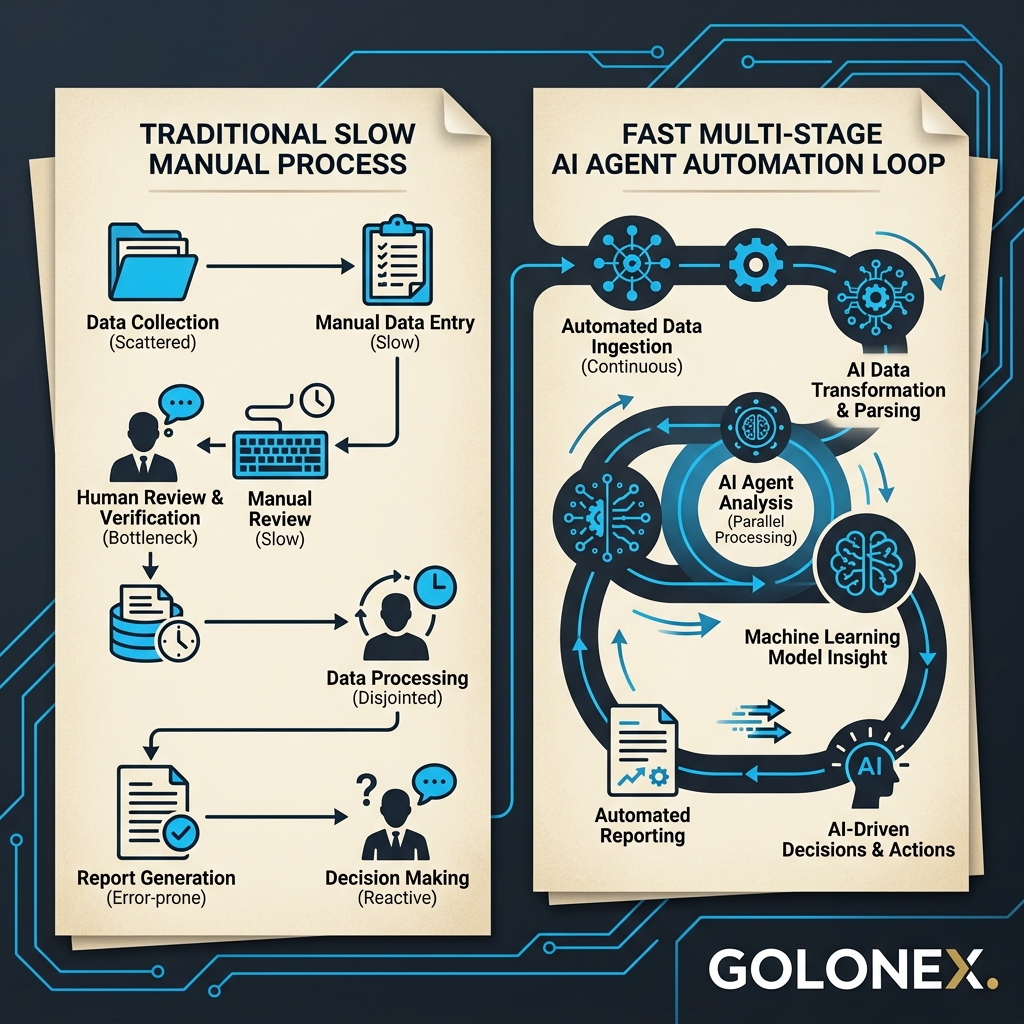
This dramatic timeline compression is why reactive security is obsolete. If your organization relies on standard 30-day patching cycles for critical internet-facing interfaces, you are defending a medieval castle with wooden gates against modern digital artillery.
The Regulatory Response: CERT-In 2026 Guidelines
To counter the rise of AI-assisted cyber threats India, CERT-In has established strict operational expectations for critical digital infrastructures, government entities, and regulated corporate spaces. The core directive is simple: you must match the speed of the attacker with the speed of your defense.
This mandates three fundamental shifts in enterprise security posture:
- From Periodic to Continuous: Moving away from annual penetration testing toward continuous attack surface monitoring and automated vulnerability validation.
- From Perimeter-Centric to Zero Trust: Enforcing absolute least-privilege access and micro-segmentation, assuming that the network perimeter has already been breached.
- From Manual to Automated Response: Leveraging secure orchestration (SOAR) workflows to isolate compromised hosts and revoke stolen API credentials instantly without waiting for human approval.
Mapping Your Readiness
Understanding the threat is only the first step. To survive in this new offensive landscape, your enterprise must evaluate its current defensive posture against the official guidelines.
To help your team perform a rigorous internal audit, we have prepared a complimentary companion resource: the Golonex Interactive CERT-In AI Blueprint Gap Analysis Platform live at tools.golonex.ai. This online assessment module allows your CISO or security consultants to self-audit your cloud configurations, identity access boundaries, and API integrations, automatically generating a live risk scorecard and visual readiness dashboard.
[!TIP] Access the live Interactive Gap Analysis Platform directly on tools.golonex.ai to self-audit your organization's compliance status and view your readiness dashboard.
In the next chapter, we will deconstruct the step-by-step anatomy of an AI-assisted breach, tracing exactly how an autonomous payload exploits unhardened cloud management planes and insecure APIs.
Read Chapter 2: Anatomy of an AI-Assisted Breach