Most businesses do not realize they are leaking capital until a structural crisis forces them to audit their accounts. In the digital era, this leakage is rarely a single, catastrophic financial error. Instead, it is a quiet, continuous drain: the compounding cost of seat-licensed Software-as-a-Service (SaaS).
Over the last fifteen years, the per-seat subscription model has become the default distribution mechanism for software. While it succeeded in making high-quality tools accessible without massive upfront capital expenditure, it introduced a new, silent inefficiency: software sprawl. Today, a typical mid-market company with twenty to thirty employees spends between $35,000 and $70,000 annually on SaaS licenses alone.
Worse, empirical audits show that the vast majority of these tools are utilized at less than 30% of their actual cognitive capacity. Organizations are paying massive premiums for complex feature suites when they only use basic data entry fields.
The Macroeconomics of Software Sprawl
According to industry data—specifically Zylo’s SaaS Management Index—the average modern enterprise maintains hundreds of active software subscriptions. Shockingly, the data indicates that up to 38% of a company’s SaaS budget is wasted on redundant tools, underutilized licenses, or forgotten orphan subscriptions.
This inefficiency is not a failure of management; it is a feature of the per-seat licensing model. When software companies charge per user, their financial incentives are aligned with getting as many staff members registered as possible, regardless of how often those staff members open the application.
Consider a typical software stack for a modern 25-person service or logistics firm:
| Category | Tool Example | Typical Monthly Cost (25 seats) | Annual Overhead | | :--- | :--- | :--- | :--- | | Customer Relationship Management | HubSpot Sales Hub (Professional) | $1,250 | $15,000 | | Customer Helpdesk | Zendesk Suite (Growth) | $1,875 | $22,500 | | Project Management | Asana Business | $625 | $7,500 | | Business Intelligence / Analytics | Tableau Creator & Viewer | $900 | $10,800 | | Auxiliary Utilities (E-Sign, Scheduling, Forms) | DocuSign, Calendly, Typeform | $450 | $5,400 | | Total Standard Overhead | | $5,100 / mo | $61,200 / yr |
This total is conservative. It excludes custom API integration fees, administrative management time, data extraction costs, and the "integration tax" of third-party automation tools like Zapier, which are required just to keep these disconnected databases in sync.
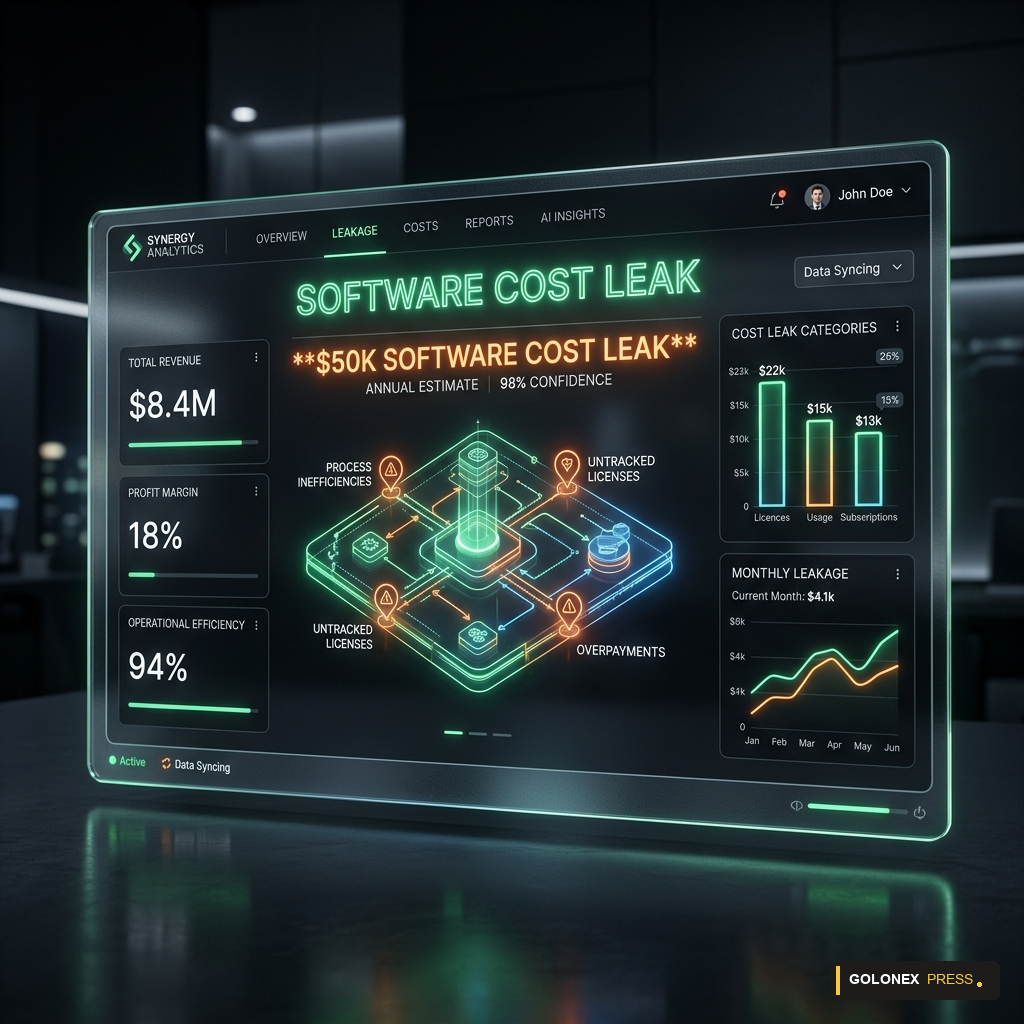
Visualizing the SaaS Leak
Below is a conceptual representation of how these costs quietly compound across typical business structures. Every seat added for minor dashboard visibility leaks capital out of your operating margin:
The Core Misalignment: The Per-Seat Tax
The per-seat tax introduces two fundamental operational penalties to a growing business:
- Growth Penalization: If your business expands and hires five more operators, your operational software costs increase automatically by hundreds of dollars per month, even if the actual work being performed has not changed.
- Feature Underutilization: You pay full price for an enterprise CRM subscription for a customer support agent who only needs to check a client's email address. You are buying a heavy industrial factory when you only need a filing cabinet.
Furthermore, traditional SaaS is passive. It acts as a digital filing cabinet that requires manual human input—clicking buttons, dragging cards, copy-pasting customer details, and manually composing emails. Your highly paid human staff are spent performing rote data-entry tasks to keep your expensive software systems up to date.
The Shift: From Tool to Digital Colleague
We are on the cusp of the greatest technological realignment since the transition from desktop software to the cloud. The shift is simple: We are moving from software as a passive tool to software as an active, autonomous workforce.
An AI agent is not a chatbot that simply chats with users. It is an active cognitive workflow that can:
- Read and synthesize incoming documents.
- Interface directly with serverless databases to write, update, and search records.
- Act on API endpoints to send emails, generate custom PDFs, or trigger external services.
- Coordinate with other specialized agents to execute complex, multi-step business procedures.
Instead of paying $1,875 per month for 25 people to manually answer repetitive customer queries inside a helpdesk portal, you can deploy a custom cognitive customer support pipeline. The system runs on a consumption-based model—you pay only for the exact serverless compute time and token transactions used to resolve the query. If your volume drops, your software bill collapses to near-zero. If your volume scales, you pay pennies per ticket instead of hiring more human data-entry operators.
By shifting from a seat-licensed paradigm to an autonomous, usage-based model, organizations can completely eliminate software bloat, reclaim up to 90% of their software expenditure, and free their human talent to focus on relationship management, strategic design, and high-value creative execution.
In the next chapter, we will break down the underlying architecture of this new paradigm—the AI Agent Stack—and show why you do not need to be a software giant to build and own it.